Early Childhood Education in India: Enrollment, Facilities, Drop-out, and Outcomes
Enrollment
Let's look at the Gross Enrollment Ratio (GER) by various states in India. GER measures the ratio of the number of enrolled students over the number of eligible students for a grade. A ratio of 100 means every eligible student is enrolled.
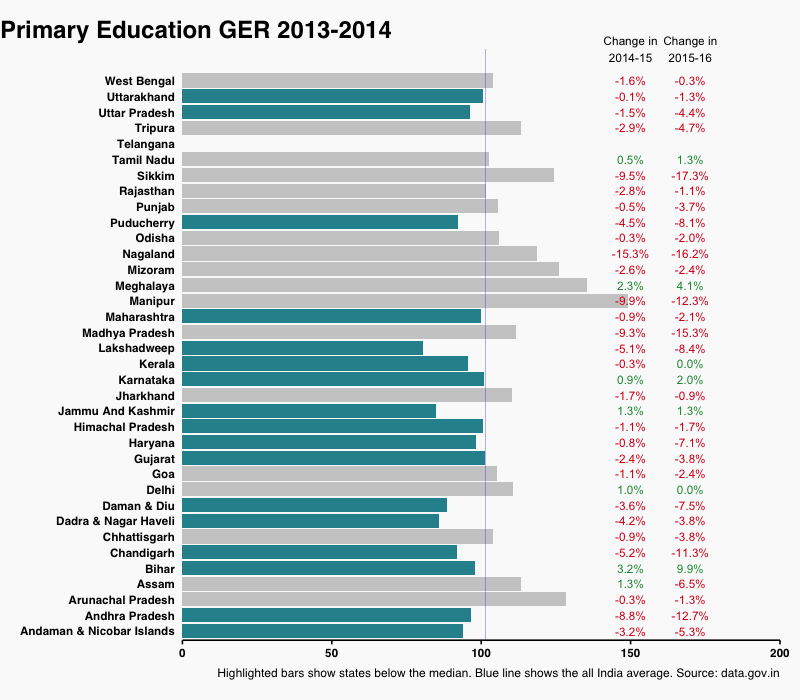
You don't see any changes in year over year numbers, but that majority of the states have a GER of 100 or more. Since there's no change YOY, let's pick the latest year and see the GER by gender.
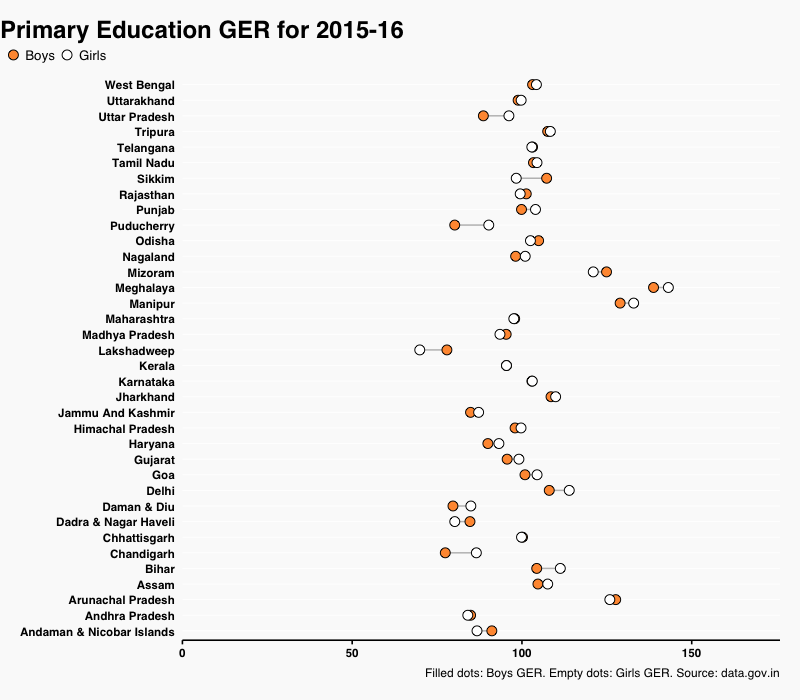
You can see that for most of the states, GER of girl students is better than boys GER. Does the enrollment stay at high levels when you look at higher grades?
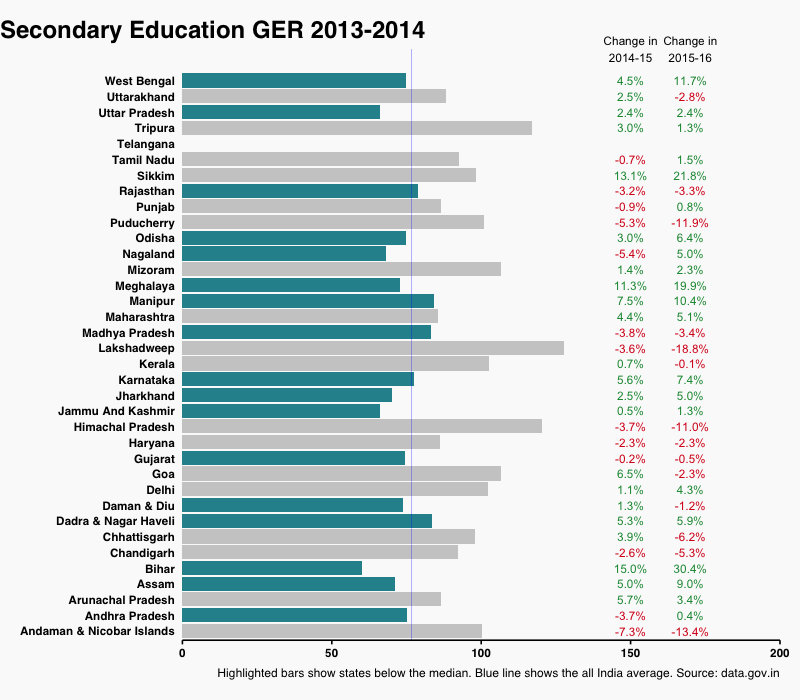
Now you do see that the GER has dropped below 100, meaning not everyone eligible for that grade has enrolled. Jammu and Kashmir, Uttar Pradesh, Bihar and a few others have very low GER.
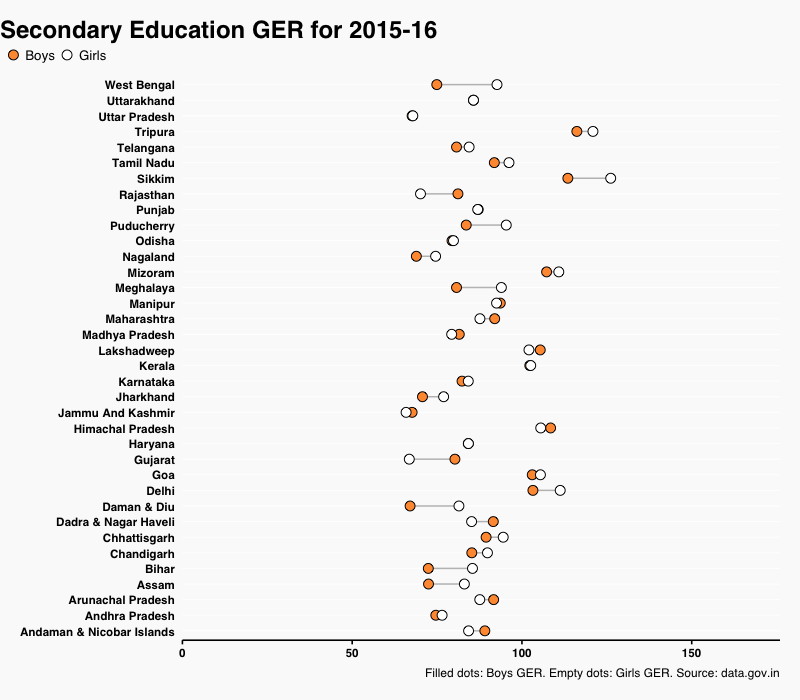
The overall trend of enrollment of girls than boys continues in secondary education too, with a few exception in the states of Rajasthan and Gujrat. Let's look at the enrollment ratio at higher secondary levels.
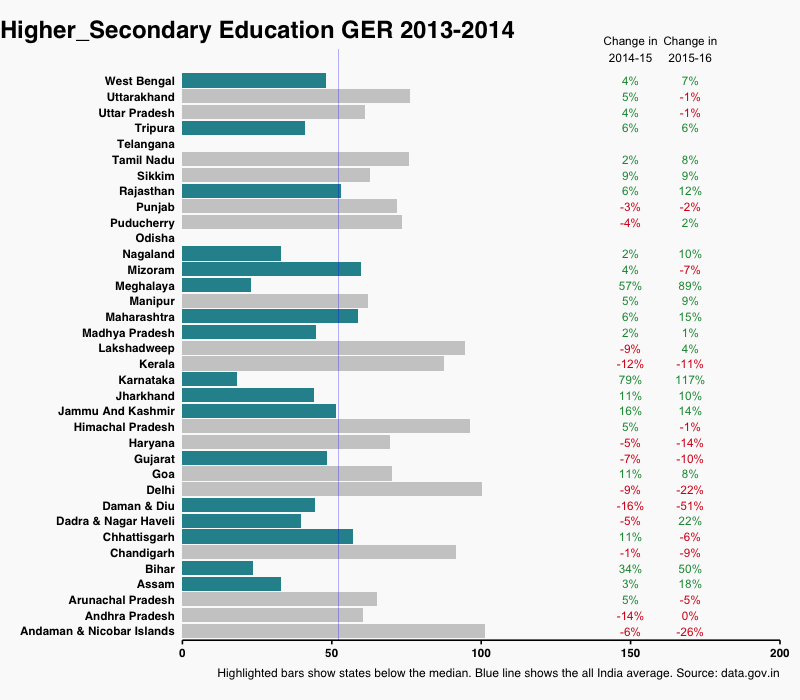
Now you start seeing that the GER drops significantly, with the national average hovering around 50%. That means, one of two eligible students are not enrolling at higher secondary level.
Let's see this drop of enrollment between primary and higher secondary grade levels from a different point of view. The state of Meghalaya led the nation in primary grade level GER in 2015-2016 year, but the higher secondary GER dropped to 45, a 225% drop.
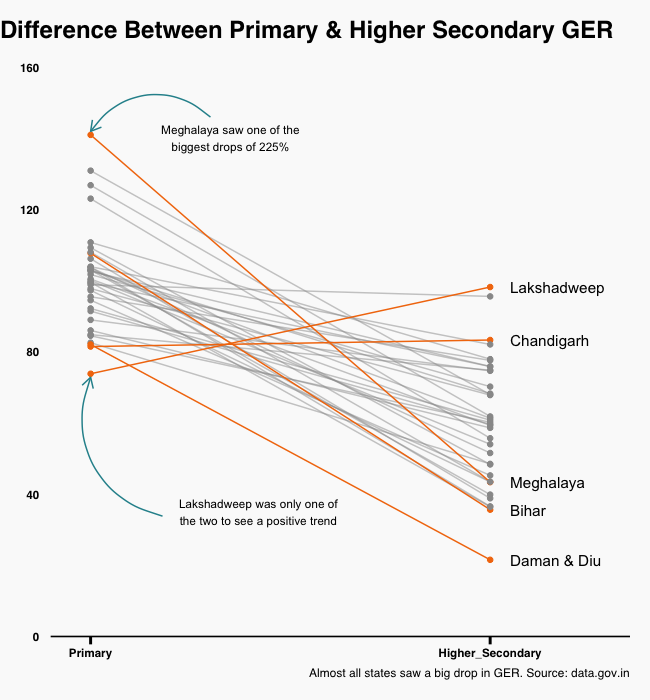
Most of the states saw this drop, except for Lakshadweep, which saw a modest increase, and Chandigarh, which stayed at the same GER. This is an alarming trend because the country is losing many of its eligible students.
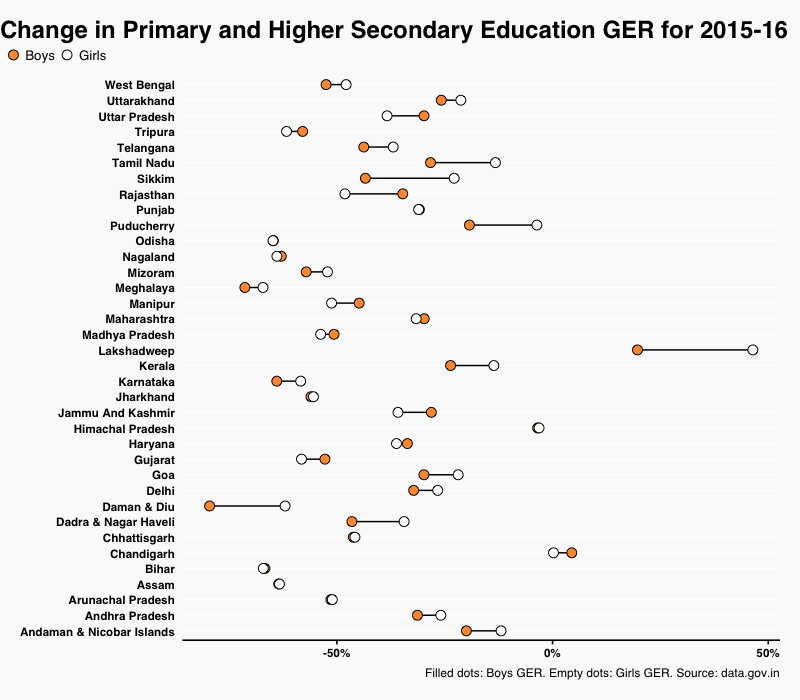
Even in the significant drop in the enrollment ratio from primary level to higher secondary level, the change female GER is still lesser than the male GER. However, this change is different in the states of Rajasthan and Gujarat: the percent change in GER from primary to higher secondary for males is higher than for females.
Drop-out

Even in the drop-out rates, boys outpace girls. For example, the state of Assam saw close to 15% drop-out rate in primary education, but the boys still had a higher drop-out rate than girls.
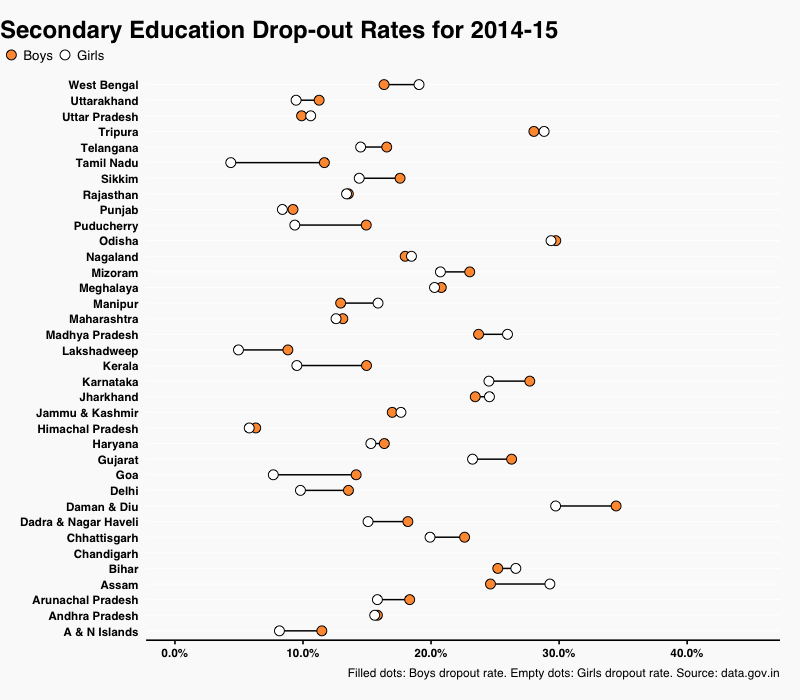
The drop-out rates for the students in secondary education level were worse than the primary education level, and yet again, boys outpaced girls in drop-outs. Almost every state saw a higher drop-out rate for boys than girls.
Facilities
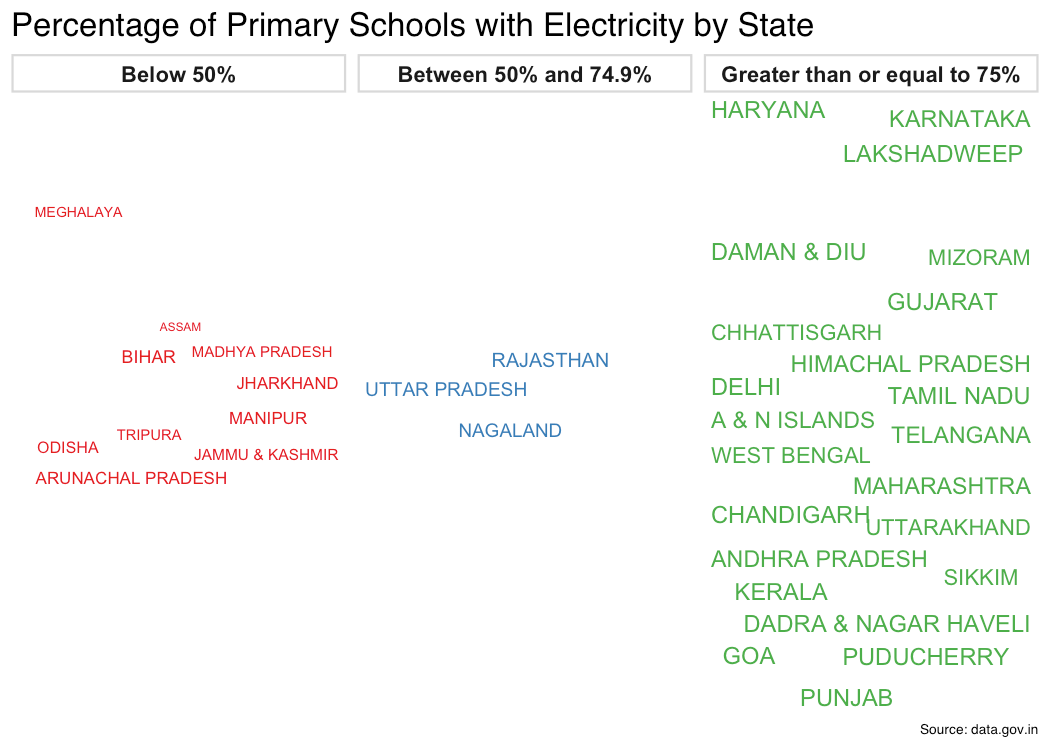
While majority of the states have electricity in the most of their primary schools, there are many states still which have fewer than 50% of schools with electricity.
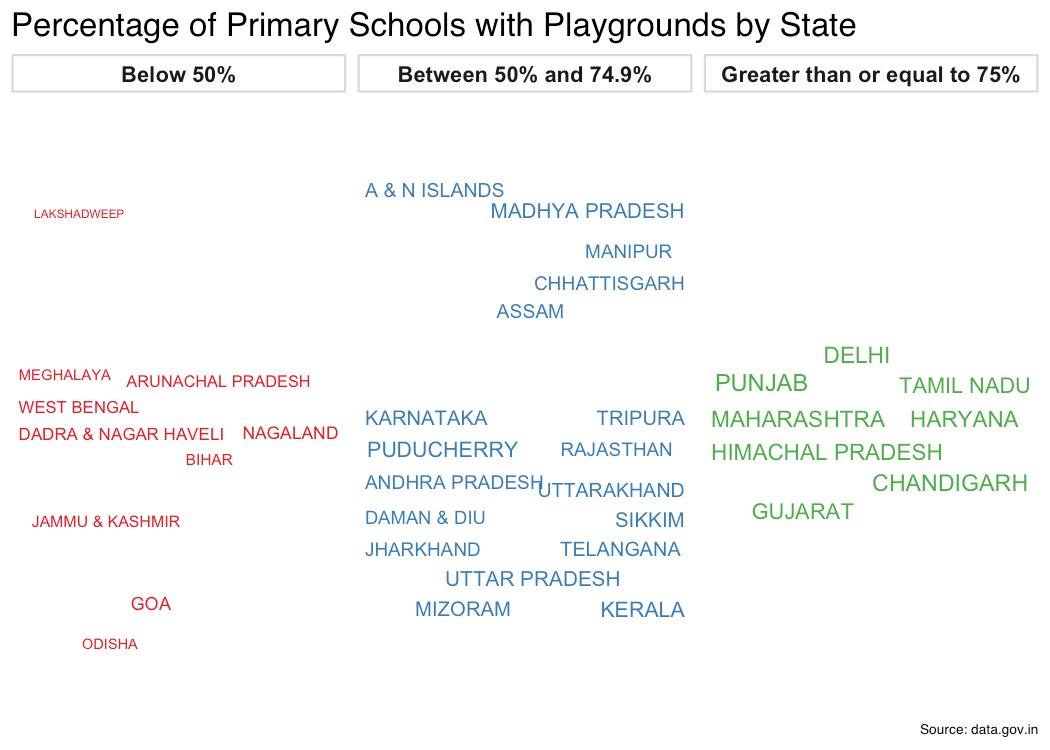
While electricity is a necessity, playgrounds seem like luxury in primary schools. Only eight states have more than 75% of their schools with playgrounds.
Outcomes
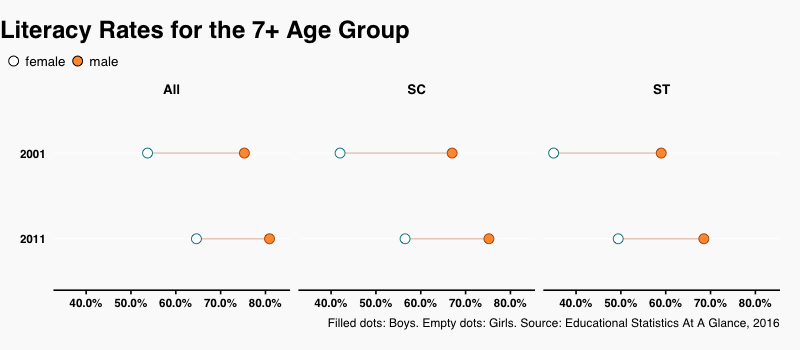
Although literacy rates in 2011 improved for the whole 7+ age group, girls were still behind the boys. Marginalized populations were still behind the general population. Also worth noticing is the reduced gap between the literacy rates of boys and girls.
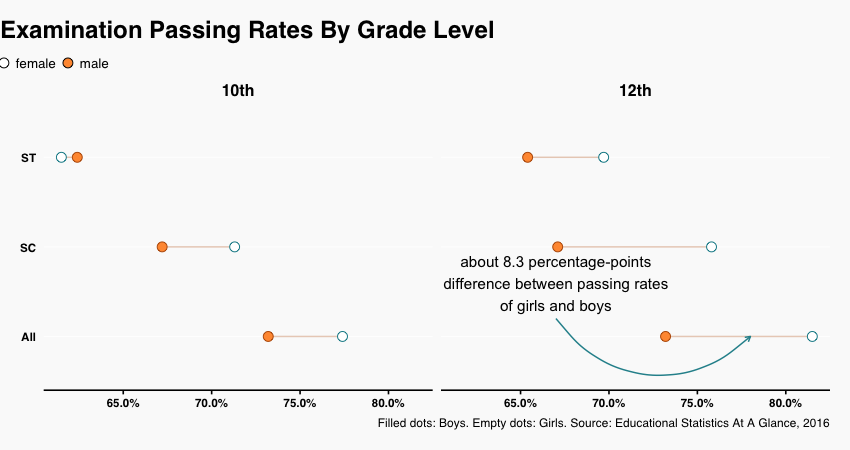
For final examination passing rates, we yet again see that females are doing much better than males. In the overall trend for the 12th grade examination, there's about 8.3 percentage-points difference between female and male passing percentage rates. You can observe this same trend even for the marginalized communities and at both 10th and 12th grade examination.
Mean achievement scores for different subjects for both genders is a mixed bag. In some states, girls lead boys -- but the two central boards (ICSE and CBSE), which by far have the highest mean scores, girls lead boys. The international board (ICSE) surpasses other the states by a huge margin, most likely because of better resources and pupils of highly educated parents.
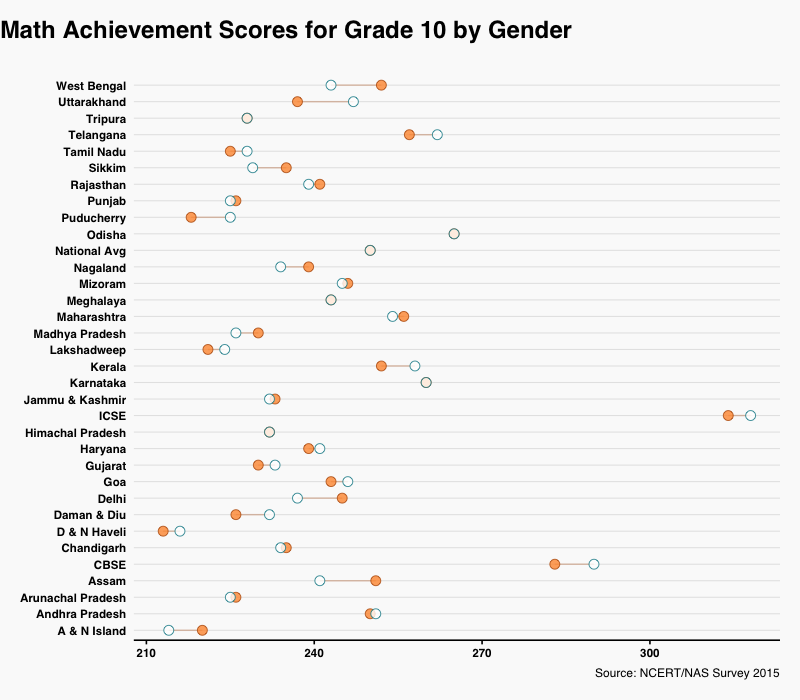
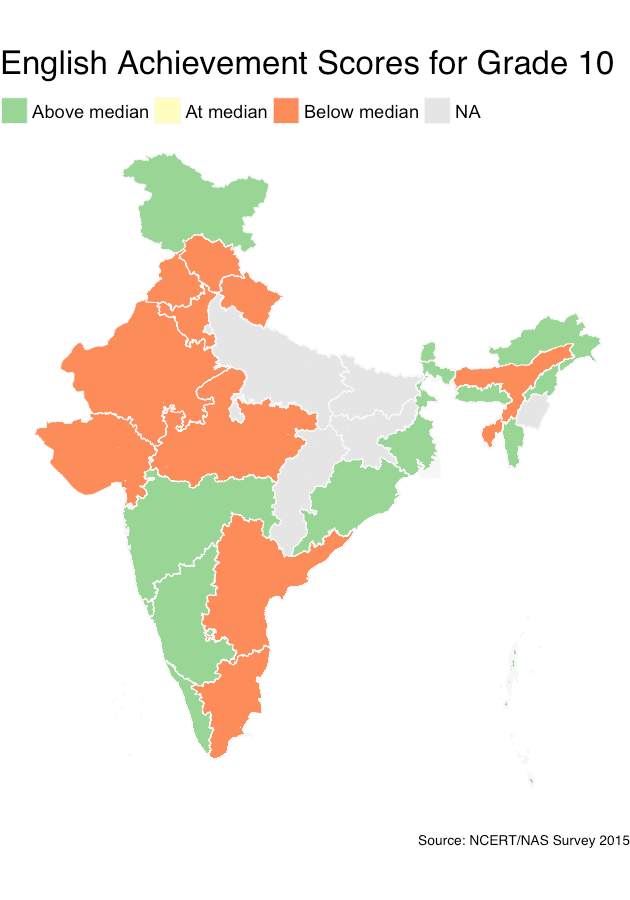
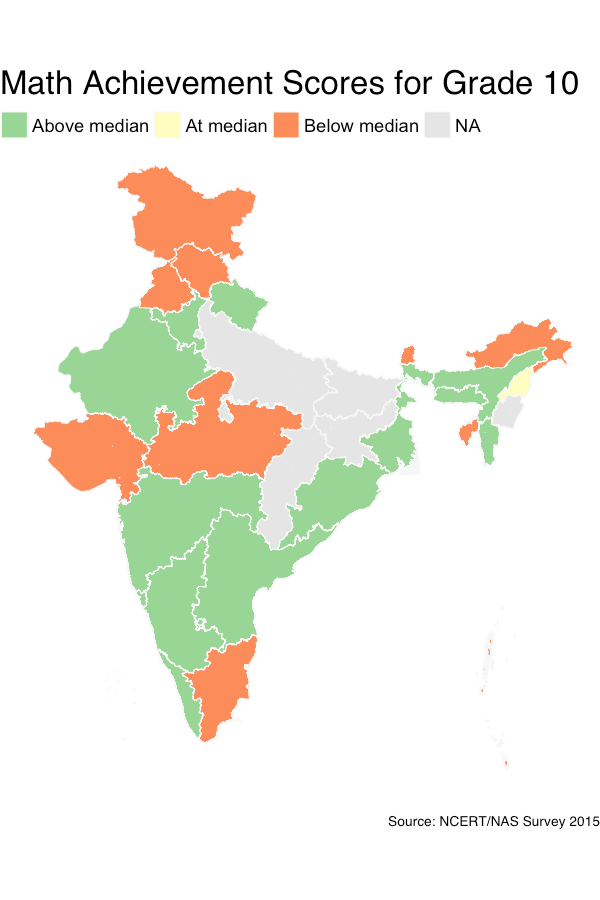
There are no discernible patterns when we look at the mean scores for English and Math by states. The traditionally Hindi-speaking North-Western states lag in English, whereas you don't see such pattern for Math.